


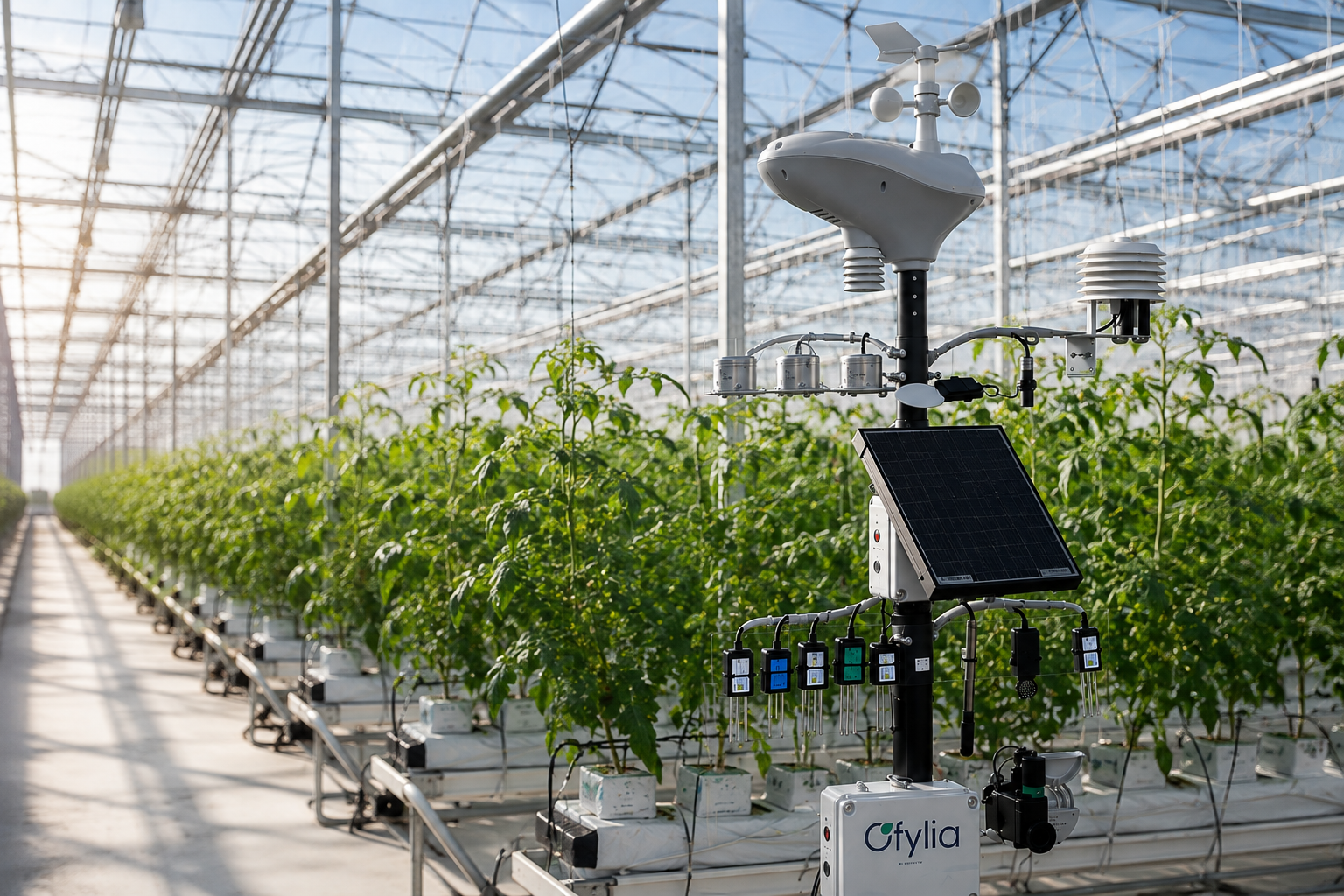
Introduction
Every agricultural decision is influenced by the environment: temperature changes throughout the day. Rainfall affects field accessibility. Humidity influences crop development.
These environmental factors are constantly evolving, making agriculture one of the most dynamic operational environments. Understanding these changes is no longer optional!
It has become an essential part of modern agricultural management. Environmental monitoring provides the reliable information needed to observe these conditions continuously and support better operational decisions.
What Is Environmental Monitoring?
Environmental monitoring is the continuous observation of environmental conditions that influence agricultural operations. Its purpose is not simply to collect measurements. It is to understand how environmental conditions affect crops, infrastructure, equipment and daily field activities.
Typical monitored parameters include:
- Air temperature
- Relative humidity
- Rainfall
- Wind speed, and much more!
Together these observations provide a comprehensive understanding of the agricultural environment.
Why environmental data matters
Agriculture depends on timing. Small environmental changes can significantly influence operational outcomes. Reliable environmental information supports decisions related to irrigation planning, harvest scheduling, crop protection and more
Without reliable observations, decisions become more uncertain! Environmental monitoring reduces that uncertainty.
Beyond weather forecasts
Weather forecasts provide valuable information. However, they describe regional conditions. Agricultural operations require information collected directly where activities take place. Microclimates often differ significantly within relatively short distances. Local monitoring provides the operational context needed for everyday decision-making.
This distinction becomes increasingly important as agricultural operations grow more complex.
Environmental monitoring and operational visibility
Environmental information should never remain isolated. When connected with operational activities, logistics and field observations, it becomes part of a broader understanding of agricultural operations.
This is where operational visibility emerges. Environmental monitoring contributes one essential layer of information within a much larger operational picture.
Supporting Sustainable Agriculture
Environmental monitoring also contributes to sustainability. Reliable environmental information allows organizations to:
- optimize water use;
- reduce unnecessary field interventions;
- improve resource planning;
- minimize environmental impact;
- support more efficient agricultural practices.
Better information often leads to better sustainability outcomes.
Building a reliable monitoring infrastructure
Effective environmental monitoring depends on more than individual sensors. Successful monitoring infrastructures require: reliable field devices, robust communication networks, continuous data collection, data validation, operational accessibility.
The objective is to create information that operators can trust every day.
Looking ahead
Agriculture will continue to face increasingly variable environmental conditions. Climate variability, resource availability and operational complexity will increase the importance of reliable environmental information.
Organizations capable of understanding these conditions in real time will be better positioned to improve operational efficiency, strengthen resilience and support more informed decisions.
Conclusion
Environmental Monitoring is no longer simply about measuring the weather. It is about understanding the environmental conditions that shape agricultural operations every day.
Reliable environmental data helps organizations reduce uncertainty, improve planning and strengthen operational visibility across increasingly complex agricultural environments.
FAQ
What is environmental monitoring in agriculture?
Environmental monitoring is the continuous observation of environmental conditions that influence agricultural operations and decision-making.
Why is environmental monitoring important?
It supports irrigation, crop protection, harvest planning and operational efficiency by providing reliable field information.
Which environmental parameters are commonly monitored?
Temperature, humidity, rainfall, wind, solar radiation, atmospheric pressure, soil moisture and leaf wetness.
How is environmental monitoring different from weather forecasting?
Weather forecasts provide regional predictions, while environmental monitoring delivers local, site-specific information directly from the agricultural environment.
How does environmental monitoring improve operational visibility?
By integrating environmental observations with operational data, organizations gain a clearer understanding of field conditions and can make more informed decisions.
No responses yet