


Agricultural monitoring systems: more than technology!
Introduction
Agriculture is becoming increasingly connected. Environmental conditions change continuously. Operations take place across large production areas. Equipment moves between fields. Products travel through complex logistics networks. Managing this complexity requires reliable information.
This is why Agricultural Monitoring Systems have become an essential component of modern agricultural operations!
However, their value is often misunderstood. Many organizations associate monitoring systems with sensors alone. In reality, successful monitoring depends on much more than technology.
It depends on how information supports operational decisions!
What are agricultural monitoring systems?
Agricultural monitoring systems are integrated solutions designed to collect, organize and make operational information available throughout agricultural activities.
They help organizations observe what is happening across the field and transform observations into actionable operational knowledge.
A monitoring system may include:
- Environmental monitoring devices
- Field data collection technologies
- Communication infrastructure
- Data acquisition platforms
- Operational dashboards
- Traceability records
Each component contributes to building a clearer understanding of agricultural operations.
Monitoring starts with operations
Technology should never define the monitoring strategy. Operations should. Before selecting devices or infrastructure, organizations should understand:
- Which activities require monitoring?
- Which operational risks exist?
- Which decisions depend on reliable information?
- Which processes require greater visibility?
Only after answering these questions does technology become meaningful. This operational-first approach is what differentiates effective monitoring systems from simple collections of devices.
The importance of reliable field information
Agricultural environments generate information continuously. Temperature, humidity, crop conditions, equipment movements. Each observation contributes to a broader understanding of operational performance.
Reliable monitoring systems organize this information so that it becomes useful rather than overwhelming.
From monitoring to operational visibility
Collecting data is only the beginning. The real value appears when different sources of information become connected.
Environmental data, operational activities, logistics, together they create operational visibility.
Instead of isolated measurements, organizations gain context. And context improves decisions!
Common challenges
Many monitoring projects fail because information remains fragmented. Typical challenges include: different devices using different standards or data collected but never analysed. Information stored in separate systems, limited visibility across operations.
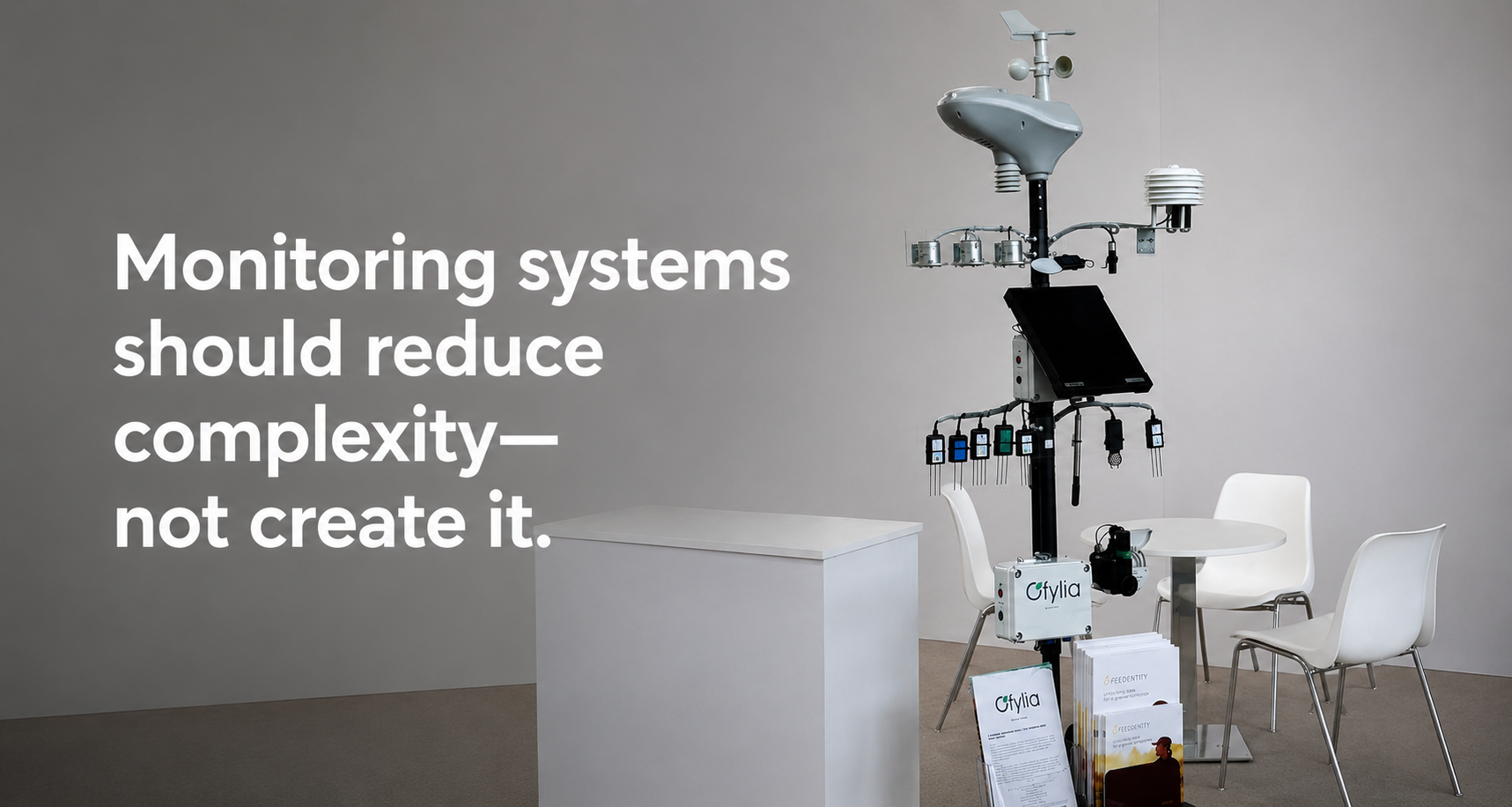
Monitoring technologies should reduce complexity—not create it!
Characteristics of effective agricultural monitoring systems
The most effective systems are built around five principles:
Reliability: information must be accurate and consistent.
Accessibility: relevant information should be available to operational teams.
Scalability: monitoring should evolve with the organization.
Integration: different information sources should work together.
Operational Relevance: every collected parameter should support a real operational decision.
Looking ahead
Agriculture is moving toward increasingly connected operational environments. Monitoring systems will become the infrastructure supporting:
- Operational visibility
- Traceability
- Sustainability
- Resource optimization
- Decision support
The organizations that succeed will not necessarily collect more information. They will understand their operations more effectively!
Conclusion
Agricultural Monitoring Systems are not simply collections of sensors or digital devices. They are the foundation of reliable operational information!
When designed around real operational needs, they help organizations improve visibility, strengthen traceability and support better decisions across increasingly complex agricultural environments.
Discover how Entity designs monitoring solutions that connect operational information across agricultural environments!
No responses yet