


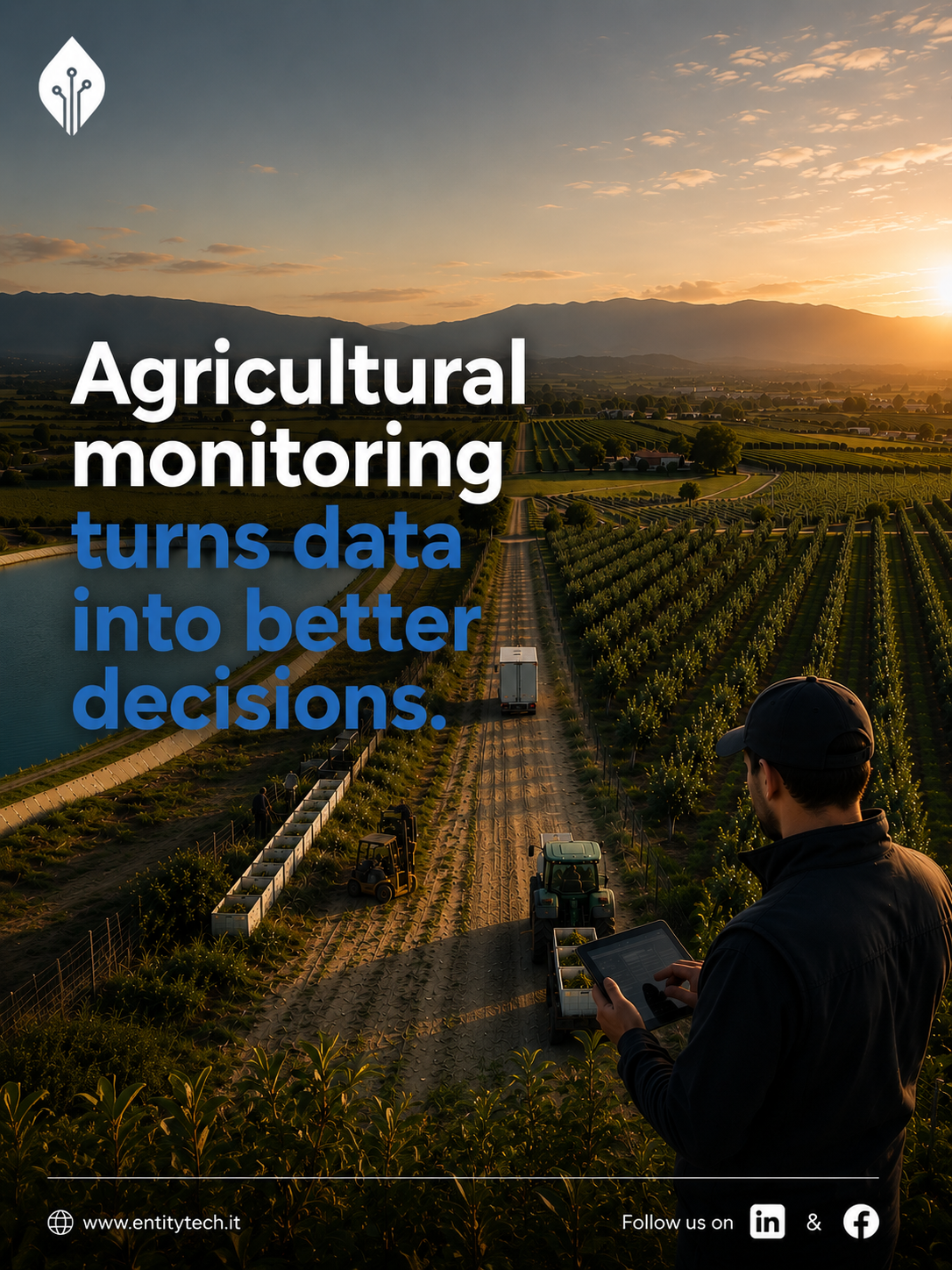
Learn what agricultural monitoring is, why it matters for modern farming, and how field data, operational visibility and monitoring systems improve decision-making and efficiency.
What Is Agricultural Monitoring?
Agriculture has always relied on observation. For generations, growers and farm managers have made decisions by reading the land, understanding weather conditions and monitoring crop development. Experience remains one of the most valuable resources in agriculture, but modern operations have become significantly more complex.
Larger production areas, increasingly variable climate conditions, stricter traceability requirements and higher operational costs require a new approach to understanding what happens in the field.
This is where Agricultural Monitoring becomes essential. Agricultural monitoring is far more than installing sensors or collecting environmental data. It is the continuous process of observing, recording and understanding the conditions that influence agricultural operations.
When reliable information is collected consistently, it becomes possible to improve operational visibility, support better decisions and increase efficiency across the entire production process.
Agricultural monitoring is the continuous observation of agricultural environments, crops, equipment and operational conditions to collect reliable information that supports decision-making. The objective is not simply to gather more data.
The objective is to understand what is happening across agricultural operations in order to improve productivity, efficiency and traceability.
Modern agricultural monitoring combines multiple sources of information, including:
- Environmental conditions
- Crop development
- Soil parameters
- Weather data
- Equipment performance
- Operational activities
- Logistics information
Together, these elements create a comprehensive view of daily operations.
Why Agricultural Monitoring Matters
Agriculture has become increasingly data-driven, but data alone has little value without context. For example, knowing that temperature increased by two degrees provides limited insight unless that information is connected with irrigation schedules, crop conditions or harvesting activities. Effective agricultural monitoring connects information across different operational processes.
Instead of looking at isolated measurements, organizations gain visibility into how multiple factors influence production over time. This broader perspective supports faster and more informed decisions.
Agricultural Monitoring Is More Than Sensors
One of the most common misconceptions is that agricultural monitoring consists only of deploying sensors.
Technology is important, but monitoring begins long before hardware is installed.
Successful monitoring starts by understanding operational processes.
Questions such as:
- What needs to be monitored?
- Which information is relevant?
- How frequently should data be collected?
- Who will use the information?
- Which operational decisions depend on these observations?
These questions define an effective monitoring strategy.
Technology simply enables it.
The role of field data collection
Every agricultural activity generates information. Harvest operations, equipment movements, environmental conditions.
Field data collection transforms these daily activities into structured operational knowledge. Reliable data allows organizations to identify trends, monitor performance and respond more quickly to changing conditions.
Crop monitoring and environmental monitoring
Monitoring crops means much more than measuring plant growth. Modern crop monitoring considers multiple variables simultaneously:
- Temperature
- Humidity
- Solar radiation
- Soil moisture
- Plant health
- Phenological development
- Weather conditions
By observing these parameters over time, agricultural professionals can make more informed operational decisions while reducing uncertainty.
Operational visibility: turning data into understanding
Collecting information is only the first step. Operational visibility is achieved when information from different sources becomes connected and understandable. Instead of isolated data points, organizations obtain a complete operational picture. This enables better planning, faster response times and greater consistency across agricultural processes.
For modern agriculture, visibility is becoming just as important as productivity!
Benefits of agricultural monitoring
A well-designed agricultural monitoring strategy supports:
- Better operational decisions
- Improved traceability
- Increased operational efficiency
- Earlier identification of anomalies
- More effective resource management
- Better environmental awareness
- Improved planning
- Greater consistency across operations
The value lies not in collecting more information, but in making better use of it.
Looking Ahead
Agriculture continues to evolve. Climate variability, sustainability requirements and increasingly complex supply chains make reliable information more important than ever. Agricultural monitoring is therefore becoming a strategic capability rather than a technological option.
Organizations that understand their operations in greater detail are better positioned to improve efficiency, strengthen traceability and make more informed decisions. Ultimately, successful monitoring is not about technology. It is about understanding operations!
Conclusion
Agricultural monitoring is transforming the way agricultural organizations understand and manage daily operations. By combining reliable field data, environmental observations and operational visibility, businesses gain the knowledge needed to make better decisions throughout the production process.
As agriculture becomes more connected, monitoring will continue to play a fundamental role in building efficient, transparent and resilient operations.
Want to learn how reliable monitoring can improve operational visibility across your agricultural processes?
Discover Entity’s monitoring solutions → Front Page – English
No responses yet